










Commuter Brake Safety: A1, G2, G2 Pro & T3 Brake Systems Explained

When you're weaving through German city traffic — whether in Berlin, Munich, or Hamburg — your scooter's brakes are your most important safety feature. A split-second delay in stopping can mean the difference between a close call and a collision.
This guide breaks down the brake systems on KuKirin's most popular commuter scooters: the A1, G2, G2 Pro, and T3. We'll compare braking distances, disc sizes, and real-world performance to help you choose the safest ride for your daily commute.
Why Brake Safety Matters for Commuters
German cities mean constant stop-and-go traffic, pedestrians stepping off curbs, and sudden obstacles. Your brakes need to be:
| Quality | Why It Matters |
|---|---|
| Responsive | Immediate reaction when you squeeze the lever |
| Consistent | Same performance every time, wet or dry |
| Short stopping distance | Less than 10 metres from top speed |
| Low maintenance | Reliable without constant adjustment |
KuKirin Commuter Brake Systems Compared
| Model | Brake System | Braking Distance | Disc Size | Waterproof |
|---|---|---|---|---|
| A1 | Front & rear disc + e-brake | 6-8 m | 140 mm | IPX4 |
| G2 | Front & rear disc + e-brake | 4-10 m | Not specified | IP54 |
| G2 Pro | Front & rear disc + e-brake | 5-12 m | 120 mm | IP54 |
| T3 | Front & rear disc + e-brake | 5-12 m | Not specified | IP54 |
| M4 Max | Front & rear disc + e-brake | 6-8 m | 140 mm | IP54 |
| S1 Max | Power-off + auxiliary brake | 2-4 m | None (solid tyres) | IP54 |

Brake System Types Explained
Mechanical Disc Brakes (All models except S1 Max)
All KuKirin commuter models use mechanical disc brakes (cable-actuated) plus an electronic brake (e-brake).
| Component | How It Works |
|---|---|
| Front disc brake | Provides most stopping power |
| Rear disc brake | Balances the stop, prevents skidding |
| Electronic brake (e-brake) | Cuts motor power instantly when lever is squeezed |
Power-Off + Auxiliary Brake (S1 Max)
The S1 Max uses a simpler system:
-
Power-off brake — Cuts motor when you squeeze the lever
-
Auxiliary brake — Provides basic stopping force
-
Works well at lower speeds (25 km/h) but less powerful than disc brakes
Verdict: For speeds above 25 km/h, disc brakes are essential. All models except S1 Max have full front and rear disc brakes.
Braking Distance: Real-World Comparison
| Model | Top Speed | Best Braking Distance | Worst Braking Distance | Safety Rating |
|---|---|---|---|---|
| A1 | 45 km/h | 6 m | 8 m | ★★★★ Very good |
| M4 Max | 45 km/h | 6 m | 8 m | ★★★★ Very good |
| G2 | 45 km/h | 4 m | 10 m | ★★★ Good |
| G2 Pro | 45 km/h | 5 m | 12 m | ★★★ Good |
| T3 | 45 km/h | 5 m | 12 m | ★★★ Good |
| S1 Max | 25 km/h | 2 m | 4 m | ★★★★ Very good (at lower speed) |
What These Numbers Mean:
| Braking Distance | Real-World Meaning |
|---|---|
| 4-6 metres | Excellent — stops in about one car length |
| 6-8 metres | Very good — typical for commuter scooters |
| 8-10 metres | Acceptable — leave extra following distance |
| 10-12 metres | Requires caution — brake earlier |

Disc Size Matters: 140mm vs 120mm
Larger disc brakes provide more stopping power because they have more leverage.
| Disc Size | Models | Stopping Advantage |
|---|---|---|
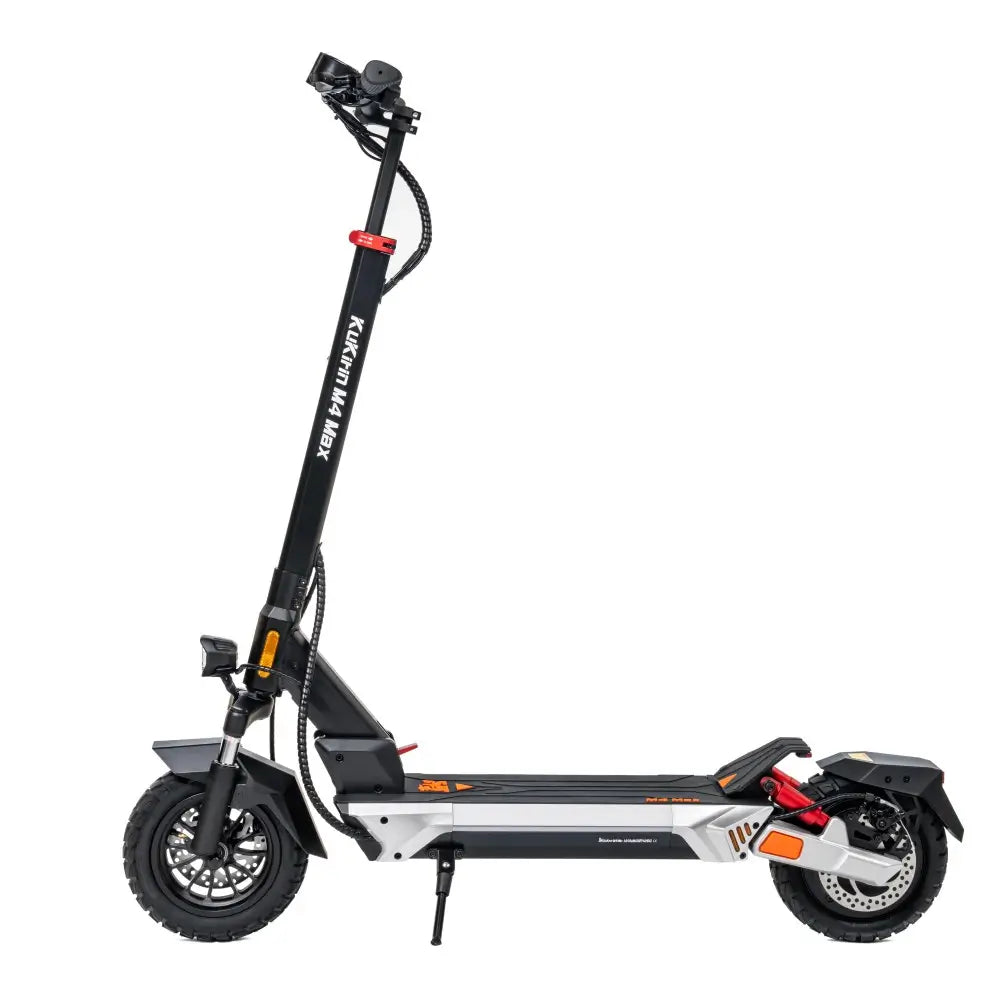
| 140 mm | A1, M4 Max | Best stopping power, better heat dissipation |
| 120 mm | G2 Pro | Good stopping power, slightly less leverage |
| Not specified | G2, T3 | Assume standard size (likely 120-140mm) |
Why 140mm Discs Are Better:
| Benefit | Explanation |
|---|---|
| More leverage | Larger diameter means more braking force with same lever pressure |
| Better heat dissipation | More surface area to cool down during repeated braking |
| Less fade | Performs better during long descents or stop-and-go traffic |
Winner for brake safety: A1 and M4 Max with their 140mm discs offer the most stopping power among commuter models.
Electronic Brake (E-brake): What It Does
Every KuKirin commuter scooter (except S1 Max's integrated system) has an electronic brake that:
| Function | Benefit |
|---|---|
| Cuts motor power instantly | Prevents the scooter from continuing to push while braking |
| Activates immediately | No delay when you squeeze the lever |
| Works alongside disc brakes | Adds extra stopping force |
Note: The e-brake is not a separate brake lever — it activates when you squeeze the regular brake lever.
Model-by-Model Brake Analysis
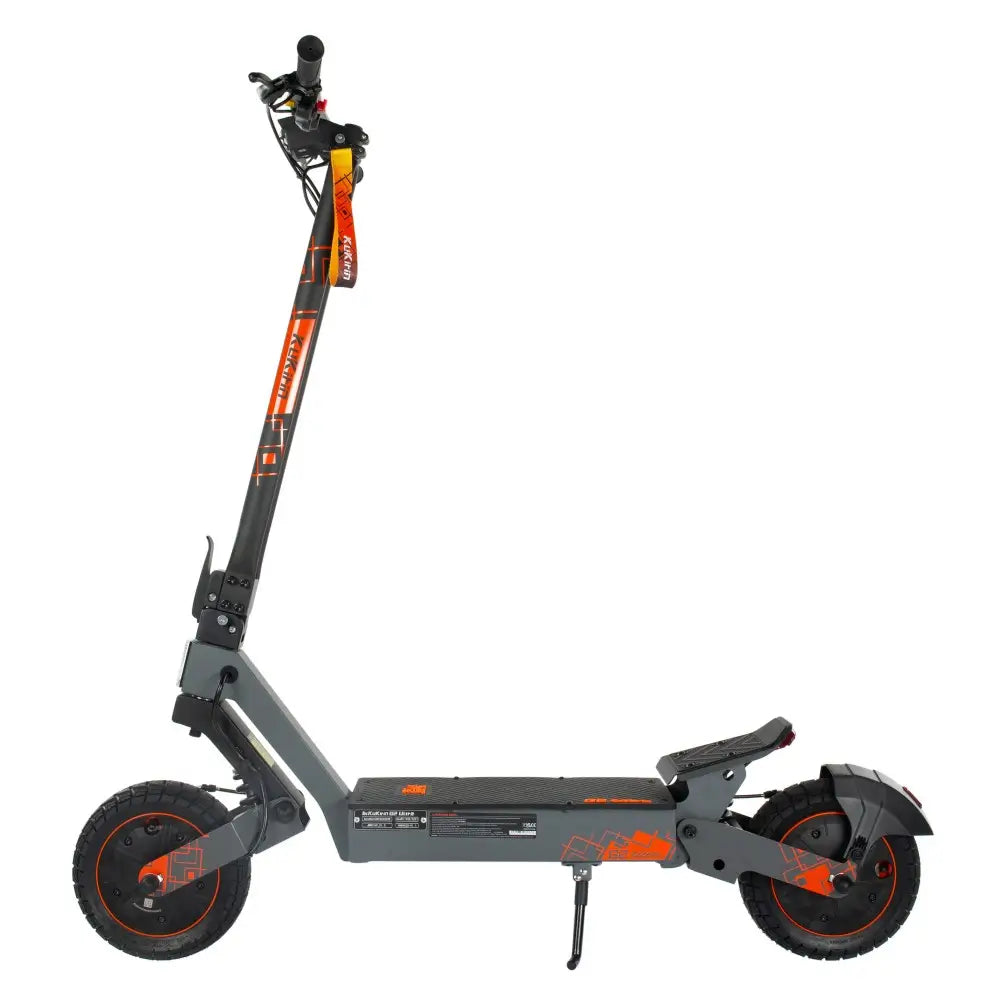
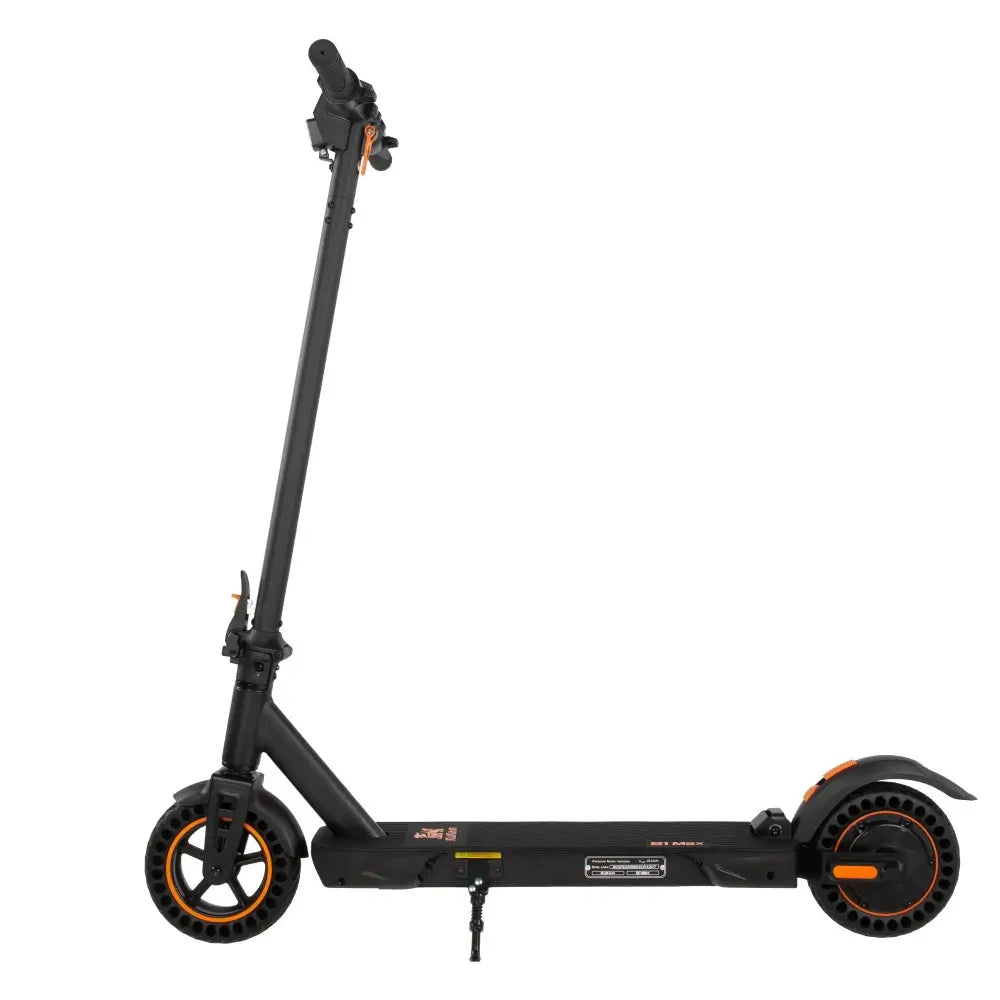
KuKirin A1 — Best Disc Brakes (140mm)
| Feature | Detail |
|---|---|
| Brakes | Front & rear disc + e-brake |
| Disc size | 140 mm (largest in class) |
| Braking distance | 6-8 metres |
| Best for | Riders who prioritise stopping power |
The A1 has the largest disc brakes among commuter models. The 140mm rotors provide excellent stopping power and better heat dissipation during repeated braking.
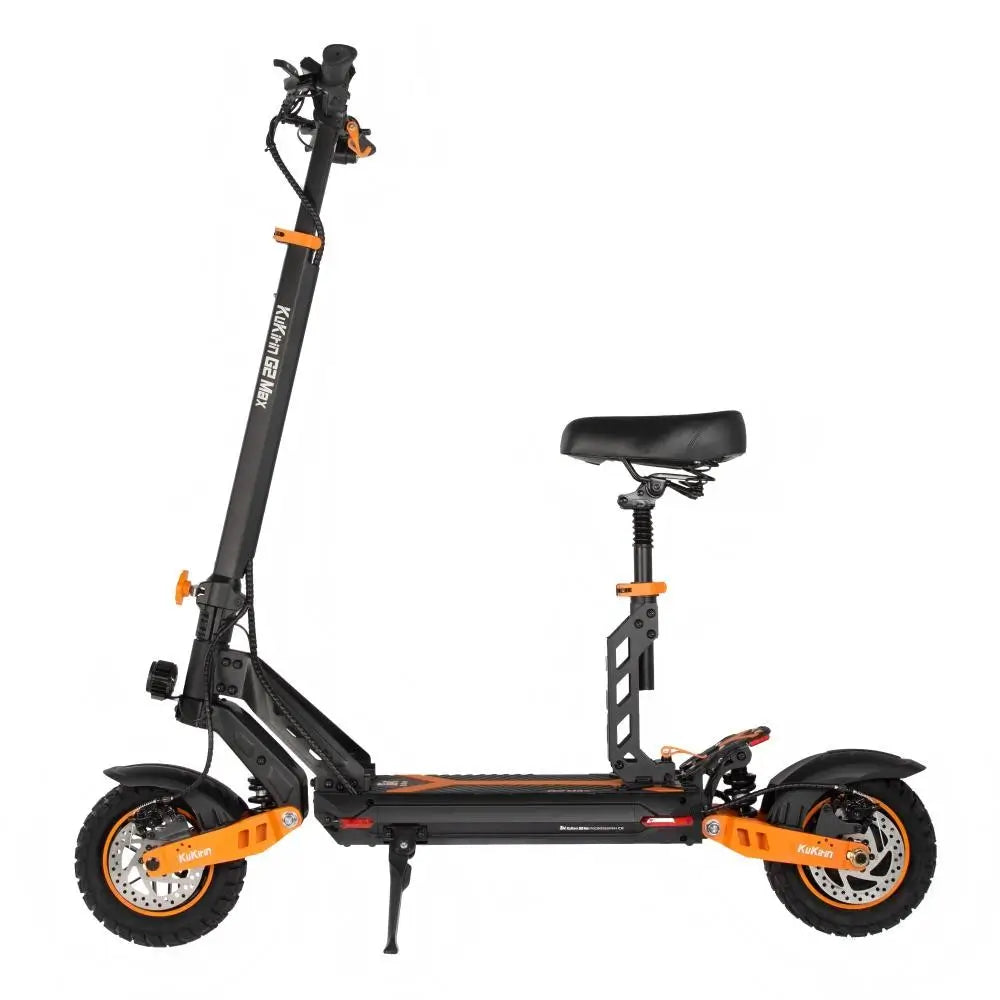
KuKirin G2 — Shortest Possible Distance (4m)
| Feature | Detail |
|---|---|
| Brakes | Front & rear disc + e-brake |
| Braking distance | 4-10 metres |
| Best for | Riders who want potentially shortest stops |
The G2 can achieve a best-case 4-metre braking distance — the shortest of any commuter model. However, this likely requires ideal conditions (dry road, perfect tyre pressure, experienced rider). Realistically, expect 6-8 metres.
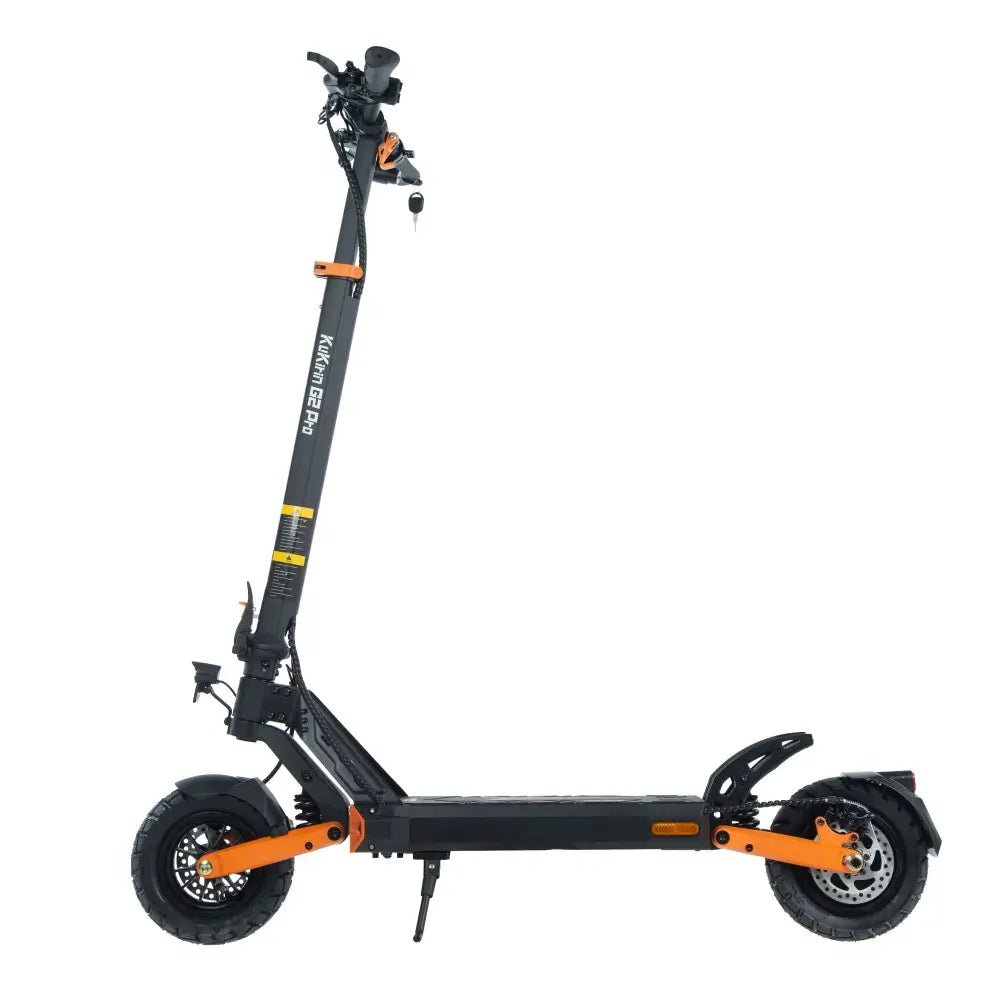
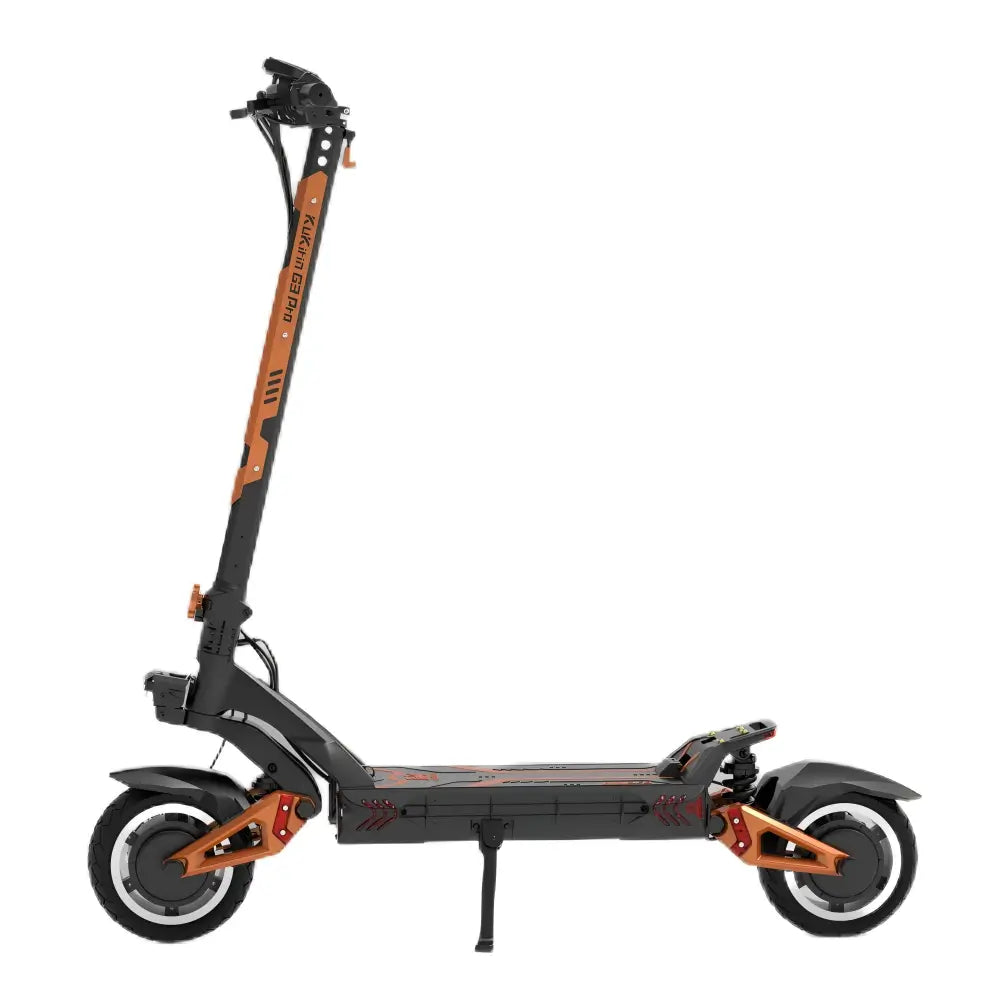
KuKirin G2 Pro — Balanced with Seat
| Feature | Detail |
|---|---|
| Brakes | Front & rear disc + e-brake |
| Disc size | 120 mm |
| Braking distance | 5-12 metres |
| Best for | Riders who want a seat and good brakes |
The G2 Pro has solid disc brakes (120mm) and the added benefit of a detachable seat. Braking distance is good but slightly longer than the A1 due to smaller discs.
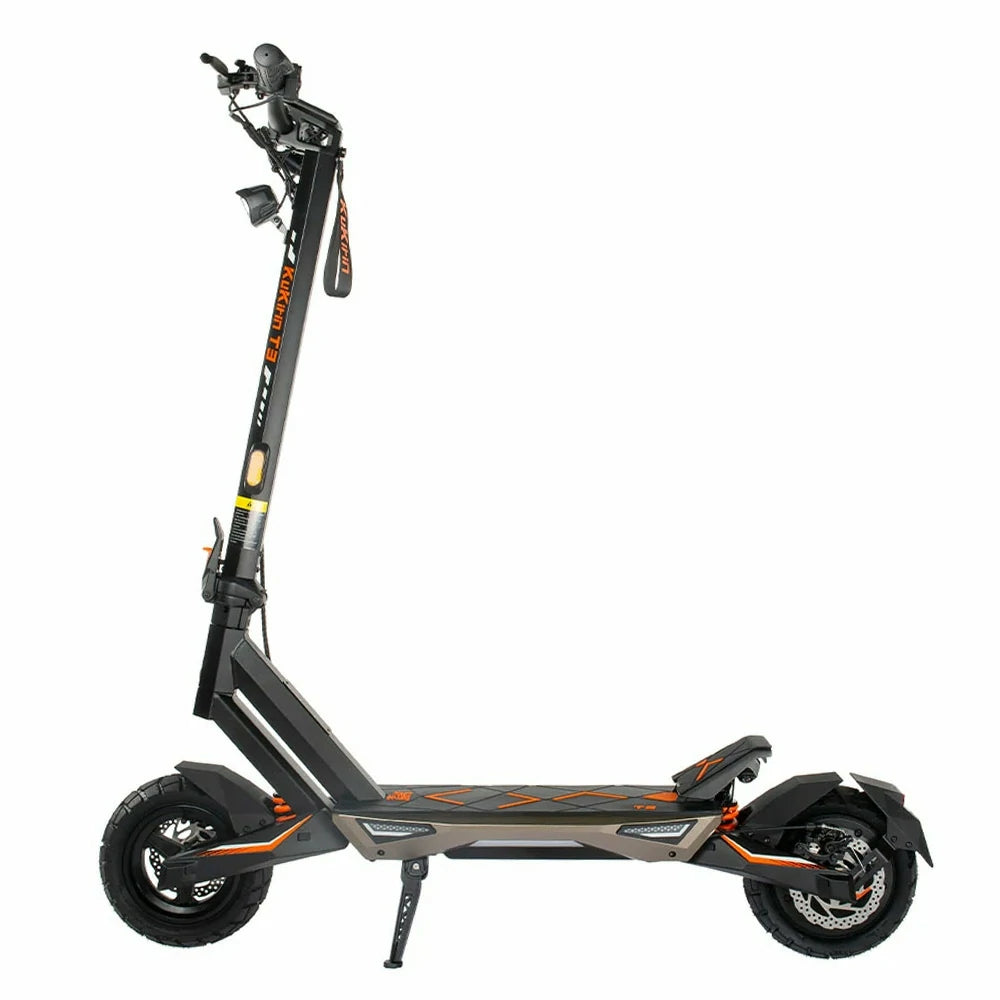
KuKirin T3 — RGB Style with Disc Brakes
| Feature | Detail |
|---|---|
| Brakes | Front & rear disc + e-brake |
| Braking distance | 5-12 metres |
| Best for | Riders who want style and safety |
The T3 matches the G2 Pro's braking performance but adds RGB ambient lighting for evening visibility.

Stopping Distance Factors (Beyond Brakes)
Your actual stopping distance depends on more than just the brake system:
| Factor | Impact |
|---|---|
| Rider weight | Heavier riders need longer distance (add 10-20%) |
| Tyre pressure | Under-inflated tyres = longer stopping distance |
| Road surface | Wet or cobblestone roads increase distance |
| Brake pad wear | Worn pads reduce stopping power |
| Speed | Stopping distance quadruples when speed doubles |
Real-World Example:
| Condition | A1 Stopping Distance |
|---|---|
| 65kg rider, dry road, new pads | 6 metres |
| 100kg rider, dry road, new pads | 7-8 metres |
| 65kg rider, wet road, new pads | 9-10 metres |
| 65kg rider, dry road, worn pads | 10+ metres |
Always leave extra following distance — especially in wet conditions or with a full backpack.
Summer Brake Maintenance Tips
| Task | Frequency | Why |
|---|---|---|
| Check brake pads | Monthly | Replace when less than 2mm thick |
| Clean discs | Weekly | Remove dirt and debris |
| Test brake lever | Before every ride | Should engage within 1-2cm |
| Listen for squealing | Every ride | Indicates glazed pads or debris |
| Check cables | Monthly | Look for fraying or stretching |
Signs You Need New Brake Pads:
| Sign | Action |
|---|---|
| Squealing or grinding noise | Inspect immediately |
| Brake lever pulls too far | Check pad thickness |
| Reduced stopping power | Replace pads |
| Visible wear indicator | Replace immediately |
Frequently Asked Questions (FAQ)
Q1: Which commuter scooter has the best brakes?
A: The A1 and M4 Max have the largest disc brakes (140mm), offering the most stopping power and best heat dissipation among commuter models.
Q2: Is the S1 Max safe for city commuting?
A: Yes, for its lower top speed (25 km/h). The 2-4 metre braking distance is excellent for that speed. However, for faster 45 km/h commuting, choose a model with disc brakes.
Q3: How much does rider weight affect braking distance?
A: Significantly. A 100kg rider will need about 20-30% longer stopping distance than a 65kg rider on the same scooter.
Q4: What's the difference between the A1 and G2 Pro brakes?
A: The A1 has larger 140mm discs (better stopping power). The G2 Pro has 120mm discs (still good, but slightly less powerful). Both have front and rear disc brakes with electronic braking.
Q5: How often should I replace brake pads?
A: Every 500-1000km depending on riding style. Replace when pad material is less than 2mm thick.
Final Verdict
| Your Priority | Best Choice |
|---|---|
| Best stopping power (140mm discs) | A1 or M4 Max |
| Shortest possible braking distance | G2 (4m best case) |
| Brakes + comfort (seat) | G2 Pro |
| Brakes + style (RGB lights) | T3 |
| Budget + simplicity | S1 Max (25km/h only) |
The bottom line: All KuKirin commuter models (except S1 Max) feature front and rear disc brakes with electronic braking — a solid safety foundation. For maximum stopping power, choose the A1 or M4 Max with their larger 140mm discs. Always maintain your brakes properly and leave extra following distance in German city traffic.
Ready to ride safely? Shop the [KuKirin A1] , [KuKirin G2] , [KuKirin G2 Pro] , and [KuKirin T3] at KuKirin DE Official.