










Mountain Riding Test: Is the G4 Ultra's 30° Climbing Enough for Europe?

Flat city commuting is one thing. Riding up a 15% gradient on a cobblestone road in the Tuscan hills is something else entirely.
If you live in or travel to Europe‘s mountainous regions—the foothills of the Alps, the Pyrenees, or the winding roads of Switzerland—climbing ability isn’t a spec sheet number. It‘s the difference between a usable vehicle and an expensive paperweight.
The KuKirin G4 Ultra boasts a 30° climbing capability, dual 1000W motors, and over 30N·m of torque. But does that translate into real-world capability on European mountain roads? We break down the physics, the terrain, and what you can actually expect when the road tilts upward.

The Reality of European Mountain Terrain
Europe isn’t just flat bike paths. Millions of people live in hilly or mountainous areas where daily routes involve significant elevation changes.
-
Alpine Foothills: Gradients of 10-20% are common on residential roads. Some driveway approaches are steeper.
-
Pyrenees: Mountain passes can exceed 20% gradient, though scooters aren‘t typically used on high mountain cols.
-
Tuscan Hills: Famous for rolling hills with 10-15% grades on paved country roads.
-
Swiss Countryside: Steep village roads and winding paths where a low-torque scooter will simply stall.
For a rider weighing 75kg, a 15% gradient requires significant continuous power. A single-motor 500W scooter will overheat and slow to a crawl. You need torque, and you need traction.
The G4 Ultra‘s Climbing Hardware
How does the G4 Ultra handle these conditions? The hardware is designed specifically for this challenge.
Dual 1000W Motors (1200W rated, 1500W peak): Two motors mean power goes to both the front and rear wheels. On a steep incline, this doubles the traction available. If the rear wheel slips on loose gravel or wet cobbles, the front wheel pulls.
Torque (≥30N·m): Torque is what actually gets you up the hill. The G4 Ultra produces over 30 Newton-meters, which is competitive with mid-range 125cc scooters. This low-end grunt allows the scooter to accelerate from a standstill on a slope without hesitation.
11-inch Tubeless Tires: Grip matters as much as power. The 11-inch tires with a 90/55-7.5 profile provide a wide contact patch. On uneven mountain roads, the larger diameter rolls over potholes and rocks better than smaller 8-inch or 10-inch wheels.
60V Architecture: As explained in our voltage breakdown, the 60V platform allows the G4 Ultra to draw less current for the same power output. Less current means less heat. On a long climb, keeping the motors and controller cool is critical.

How the G4 Ultra Compares to Other Climbers
Not all KuKirin models are built for mountains. Here’s how the lineup stacks up:
| Model | Climbing Ability | Motors | Best Terrain |
|---|---|---|---|
| G4 Max | 38° | Dual | Extreme hills, off-road |
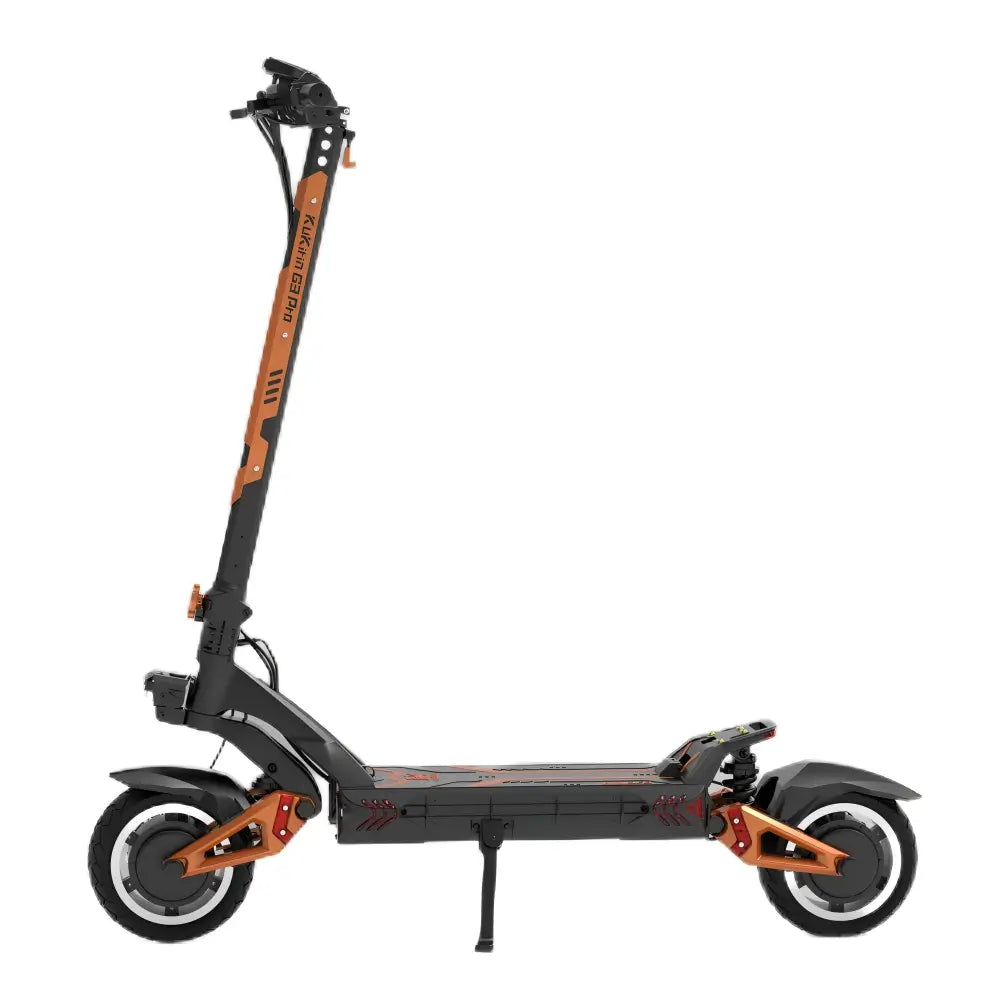
| G3 Pro | 35° | Dual | Steep urban hills |
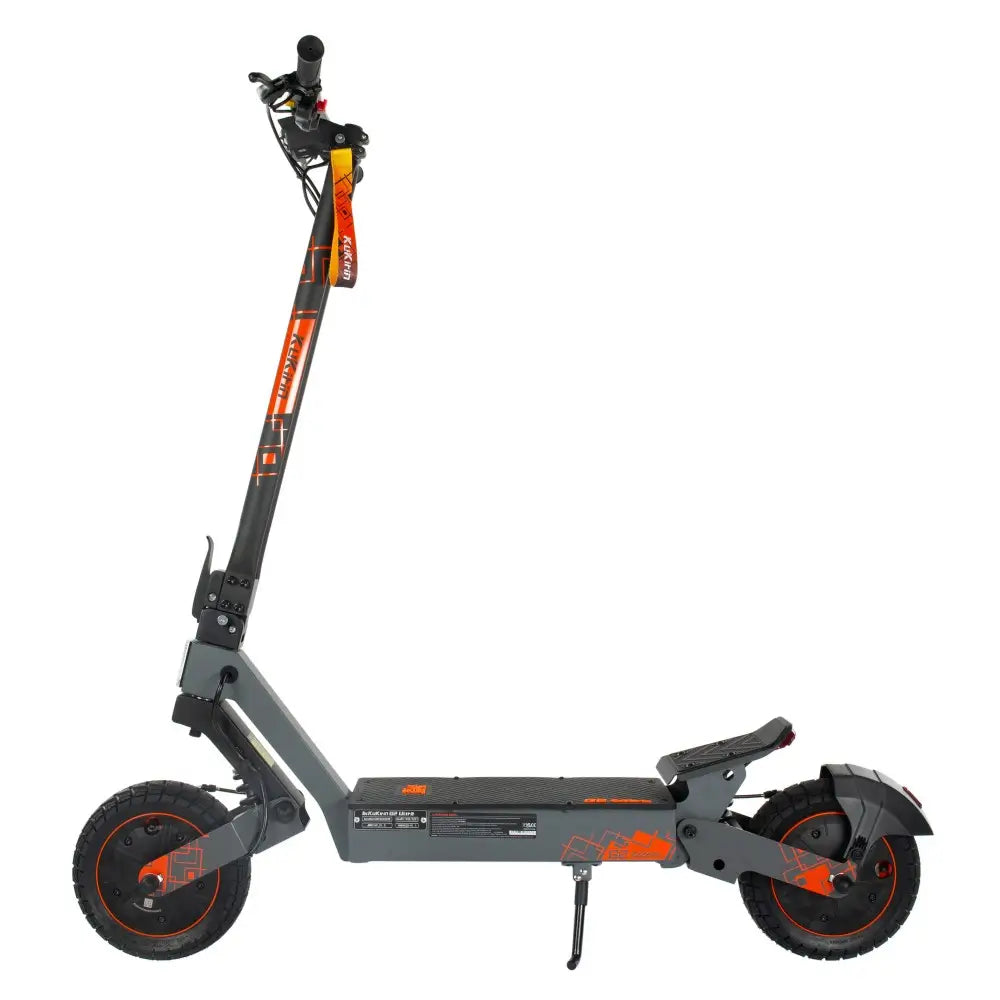
| G4 Ultra | 30° | Dual 1000W | Rolling hills, mountain towns |
| G4 | 30° | Dual | Moderate hills |
| G2 Master | 28° | Dual 1000W | City bridges, moderate slopes |
| G2 Ultra | 26° | Dual | Urban environments |
The 30° reality check: A 30° slope is a 58% gradient. This is an extreme angle—far steeper than almost any paved public road in Europe. Typical steep mountain roads top out around 15-20%. Therefore, the G4 Ultra‘s 30° rating means it has a massive buffer. On a 15% road, it will climb effortlessly without straining the motors.
For riders facing extreme unpaved inclines or the steepest paved roads in Europe, the G4 Max (38°) offers the absolute maximum capability.
Real-World Climbing Experience
What does it actually feel like to climb a mountain on the G4 Ultra?
Starting on a slope: With dual motors, there is no rolling backward. You twist the throttle, and the scooter pulls forward immediately. The dual-drive system distributes power, preventing wheel spin on loose surfaces.
Continuous climbing: The 60V system maintains speed. You don’t experience the sudden voltage sag that plagues 48V scooters on long hills. The speed holds steady at 25-30km/h on a 15% grade, which is faster than most cyclists.
Motor heat: Continuous climbing generates heat. The G4 Ultra has thermal protection built into the BMS and controller. If the motors get too hot, the system will limit power to prevent damage. On a 30°C day climbing a long mountain road, you may need to stop for 5 minutes to let the motors cool.
Crucial Tips for Mountain Riding
Climbing is only half the battle. Mountain riding requires different habits.
Watch the Battery Drain
Gravity is relentless. Climbing consumes battery capacity at roughly double the rate of flat riding. A scooter that gets 50km on flat ground might get 25-30km in the mountains.
Tip: Plan your route with a massive buffer. If you climb 500 meters of elevation, expect a significant drop in range.
Brakes Are Your Lifeline
Going up is hard; coming down is dangerous.
Downhill braking: Continuous braking on a long descent generates extreme heat in the brake discs. Overheated brakes can fade—meaning you lose stopping power.
Technique: Use engine braking (set the scooter to a low power mode and let the motor drag) combined with intermittent, firm brake applications. Do not ride the brake lever continuously.
The G4 Ultra features front and rear disc brakes with motor cut-off. When you squeeze the brake, the motor disengages, allowing the discs to slow you down.
Tire Pressure for Traction
On mountain roads, slightly lower tire pressure can improve traction on gravel or uneven pavement. However, don‘t go too low—you risk pinch flats. Stick to the recommended 340 kPa (50 psi) for paved mountain roads.

Is the 30° Climbing Enough for You?
Yes, if you ride: Paved mountain roads, steep city streets, hilly parks, and European village roads (typically 10-20% gradients).
No, if you ride: Extreme off-road trails, unpaved mountain passes, or the absolute steepest alpine roads (you need the G4 Max or a dirt bike).
The G4 Ultra is a street scooter with mountain-town capability. It will conquer the steepest paved roads you can find in Tuscany or the Alps with ease. Just manage your battery, respect the brakes on the way down, and keep an eye on motor temperatures during sustained climbs.
Frequently Asked Questions
Can the KuKirin G4 Ultra climb steep hills?
Yes. It is rated for 30° inclines (a 58% gradient). This is far steeper than almost any paved public road in Europe, meaning it handles typical mountain roads with a significant power buffer.
What is the steepest hill a G4 Ultra can handle?
The manufacturer rates it at 30°. In real-world conditions, steep paved roads (15-20% gradient) are climbed effortlessly without straining the dual motors.
How does climbing affect battery range?
Climbing drains the battery roughly twice as fast as flat riding. If you ride a route with significant elevation gain, plan for a 30-50% reduction in total range.
Which KuKirin model is best for mountains?
The KuKirin G4 Max has the highest climbing rating at 38°. The G3 Pro follows at 35°. For typical mountain towns and paved roads, the G4 Ultra‘s 30° capability is more than sufficient.
Is it safe to ride downhill on an electric scooter?
Downhill riding requires caution. Use intermittent braking rather than holding the brakes continuously, and let the motor cut-off assist in slowing down. Overheated brakes can fail.
Can I ride the G4 Ultra on unpaved mountain trails?
The G4 Ultra is designed for paved roads and light off-road paths. For aggressive unpaved mountain trails, you need a model with higher ground clearance and off-road tires, like the G4 Max.
Conquer the Hills
The KuKirin G4 Ultra’s 30° climbing ability is more than enough for European mountain towns and paved alpine roads. With dual 1000W motors and a 60V platform, it delivers the torque and traction to climb without hesitation.
Just remember: what goes up must come down. Respect the brakes, watch the battery, and enjoy the view.
For riders who face the absolute steepest terrain and demand maximum climbing power, the KuKirin G4 Max electric scooter offers a 38° climbing capability and off-road readiness.
Apply discount code NEW20 at checkout to save on your next KuKirin:
-
KuKirin S1 Max — €219
-
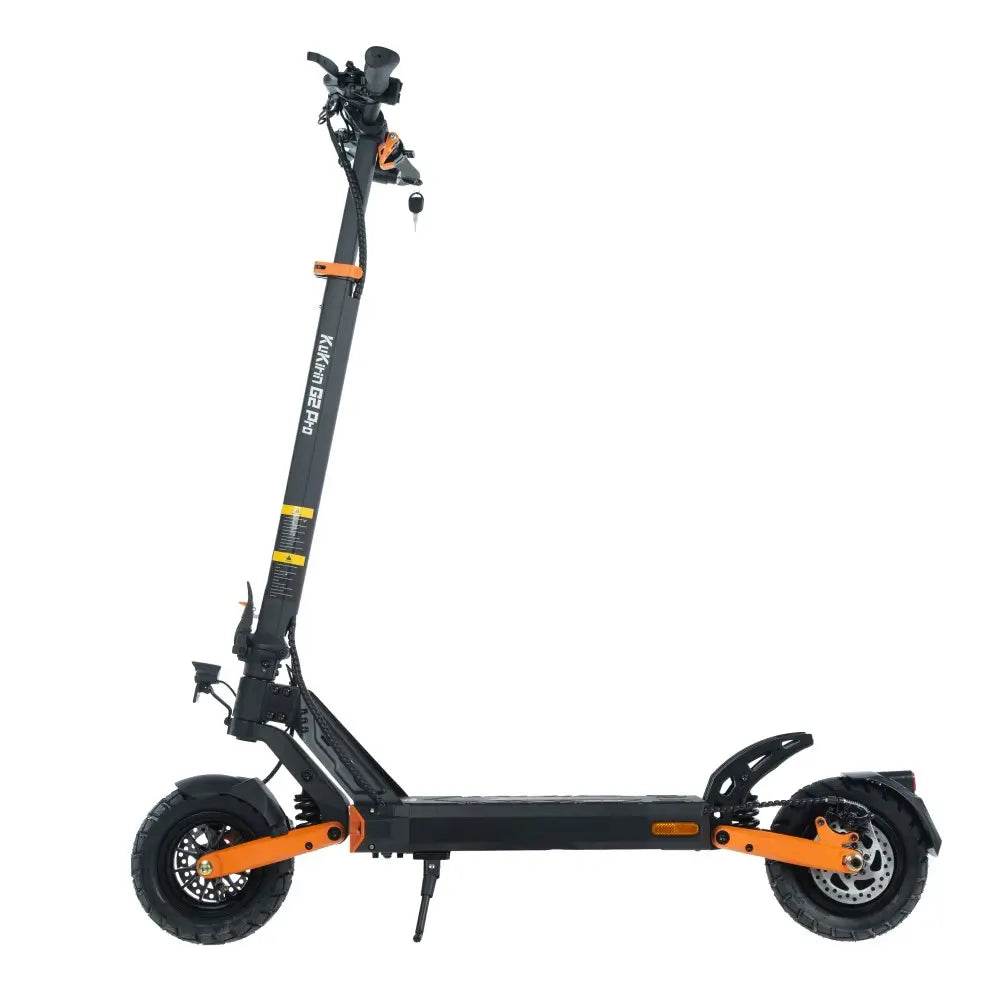
KuKirin G2 Pro — €419
-
KuKirin G2 Max — €619
-
KuKirin G3 Pro — €1,129
-
KuKirin G4 — €829
-
KuKirin G2 Ultra — €659
-
KuKirin X1 — €1,209
Prices reflect discount code NEW20 applied.