










Summer Tire Pressure Guide: Why 50psi Matters for Hot Roads

Summer is here — and so are Germany's hot roads. As temperatures climb across Berlin, Munich, Hamburg, and Cologne, one of the most overlooked aspects of electric scooter maintenance becomes critically important: tire pressure.
Riding on under-inflated tires in summer heat isn't just inefficient — it's dangerous. It reduces your range, increases the risk of punctures, and can even cause accidents. But with the right pressure, your KuKirin scooter will perform safely and efficiently all summer long.
This guide explains why 50psi (350 kPa) is the magic number for many KuKirin models, how heat affects tire pressure, and exactly how to check and adjust your tires for German summer roads.
Why Tire Pressure Matters More in Summer
The Science:
When air heats up, it expands. For every 10°C increase in temperature, tire pressure rises by approximately 1-2 psi (7-14 kPa) .
| Morning Temperature | Afternoon Temperature | Pressure Increase |
|---|---|---|
| 15°C | 25°C | +1-2 psi |
| 15°C | 35°C | +2-4 psi |
| 20°C | 40°C (asphalt) | +3-5 psi |
The Problem:
Most riders check tire pressure on a cool morning. But by afternoon, when asphalt temperatures can reach 50-60°C, that perfectly inflated tire can become over-inflated, reducing grip and increasing puncture risk.
Conversely, if you start with under-inflated tires in the morning, heat expansion might bring them to normal pressure — but you've already been riding unsafely all morning.
The Solution:
Check tire pressure when tires are cold (before riding or after 1+ hour of cooling). Inflate to the recommended pressure for your model. For summer, you may want to be at the higher end of the recommended range to account for some heat expansion — but never exceed the maximum.

KuKirin Tire Pressure Specifications: Know Your Numbers
Different KuKirin models have different tire types and pressure requirements. Here's your complete reference:
High-Performance Models (50 psi / 350 kPa)
| Model | Tire Size | Tire Type | Recommended Pressure | Why 50psi? |
|---|---|---|---|---|
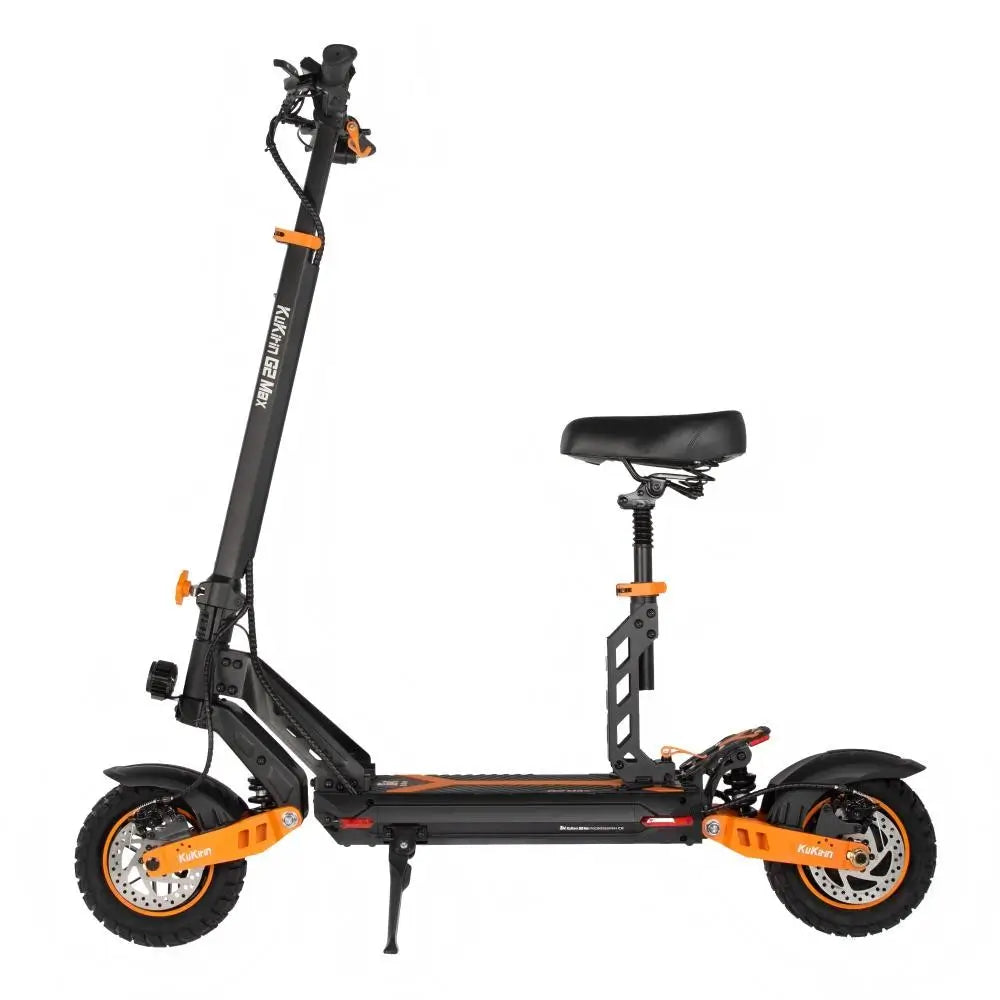
| G2 Master | 10" (255×80mm) | Pneumatic | 350 kPa (50 psi) | Max range, stable at speed |
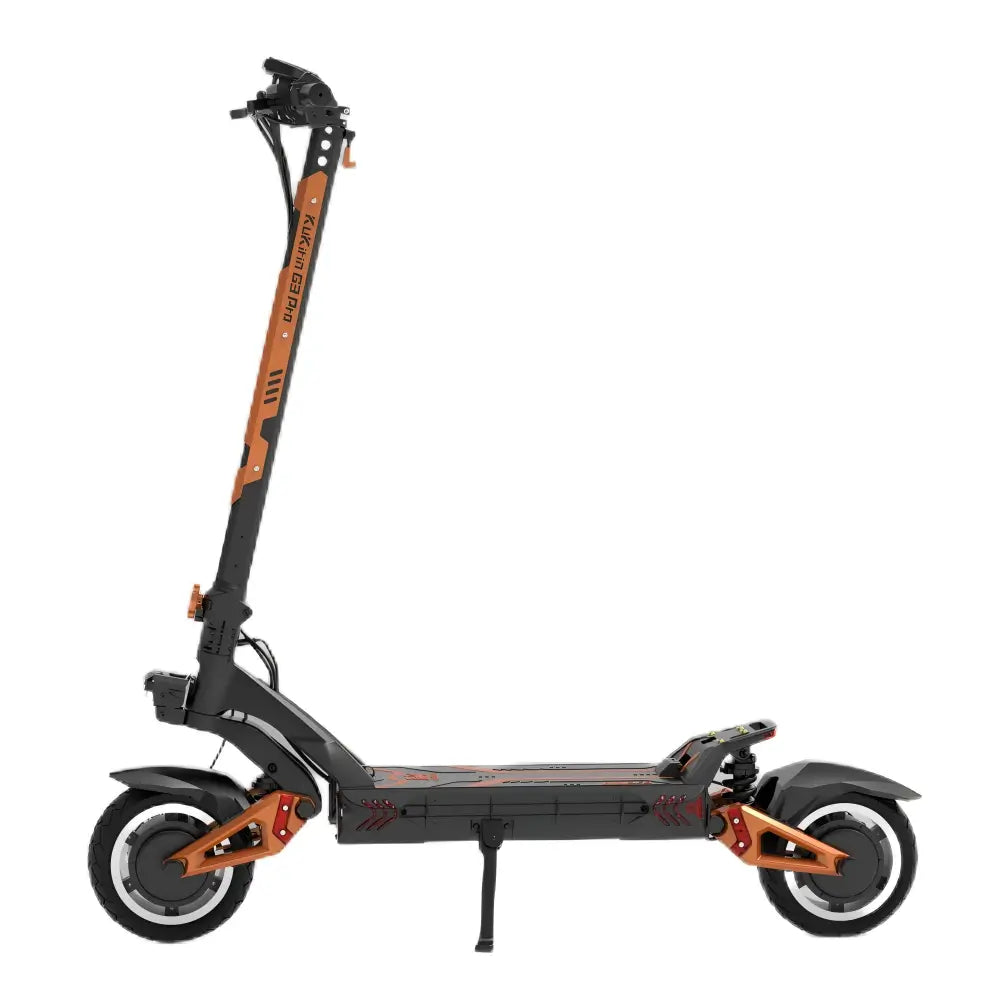
| G3 Pro | 10" (255×80mm) | Pneumatic | 350 kPa (50 psi) | Optimal for dual-motor torque |
| G4 | 11" (90/65-6.5) | Vacuum | 350 kPa (50 psi) | High speed stability |
| G3 | 10" (10×2.75-6.5) | Vacuum | 350 kPa (50 psi) | All-around performance |
G4 Max (41 psi / 282 kPa)
| Model | Tire Size | Tire Type | Recommended Pressure | Notes |
|---|---|---|---|---|
| G4 Max | 12" | Vacuum | 282 kPa (41 psi) | Larger tire, lower pressure for grip |
Mid-Range Models (various pressures)
| Model | Tire Size | Tire Type | Recommended Pressure |
|---|---|---|---|
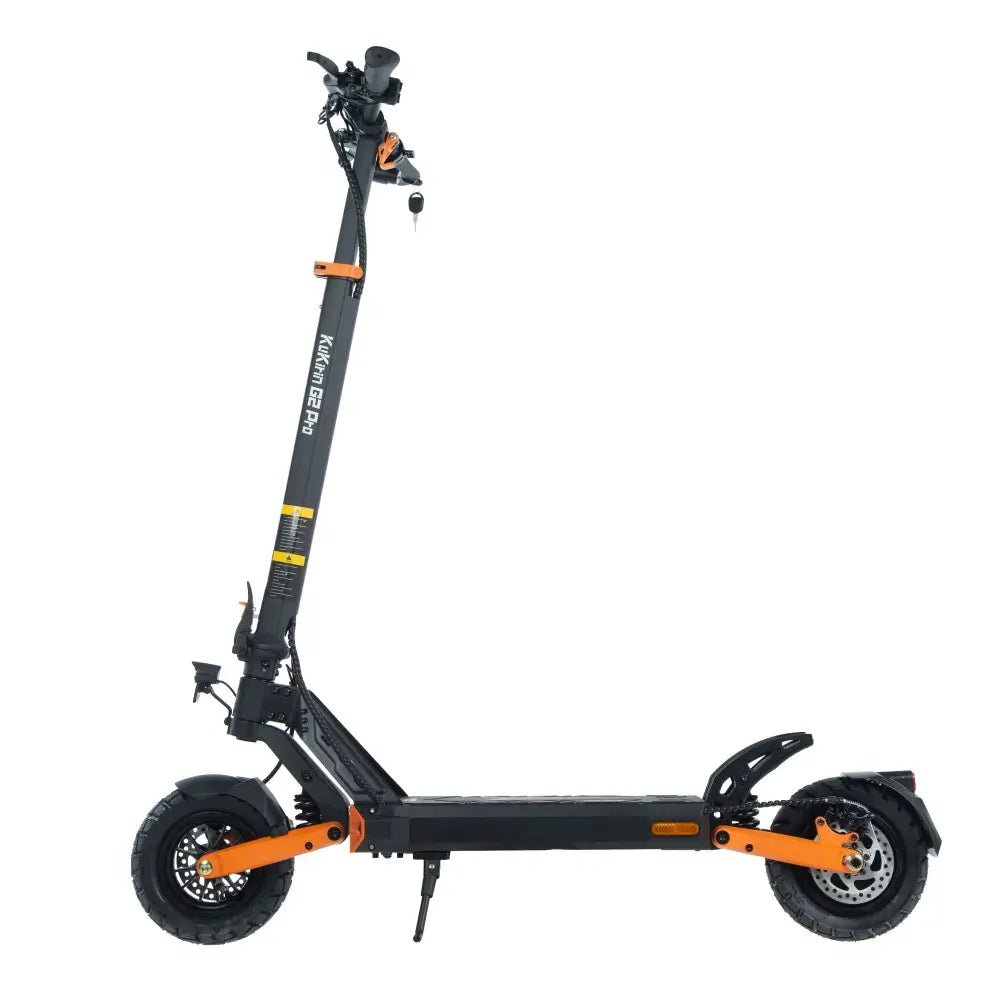
| G2 Pro | 9" | Vacuum | 340 kPa (50 psi) |
| G2 Pro VMP | 9" | Vacuum | 340 kPa (50 psi) |
| A1 | 10" | Vacuum | 330-360 kPa (48-53 psi) |
| G2 | 10" | Vacuum | 220-230 kPa (32-33 psi) |
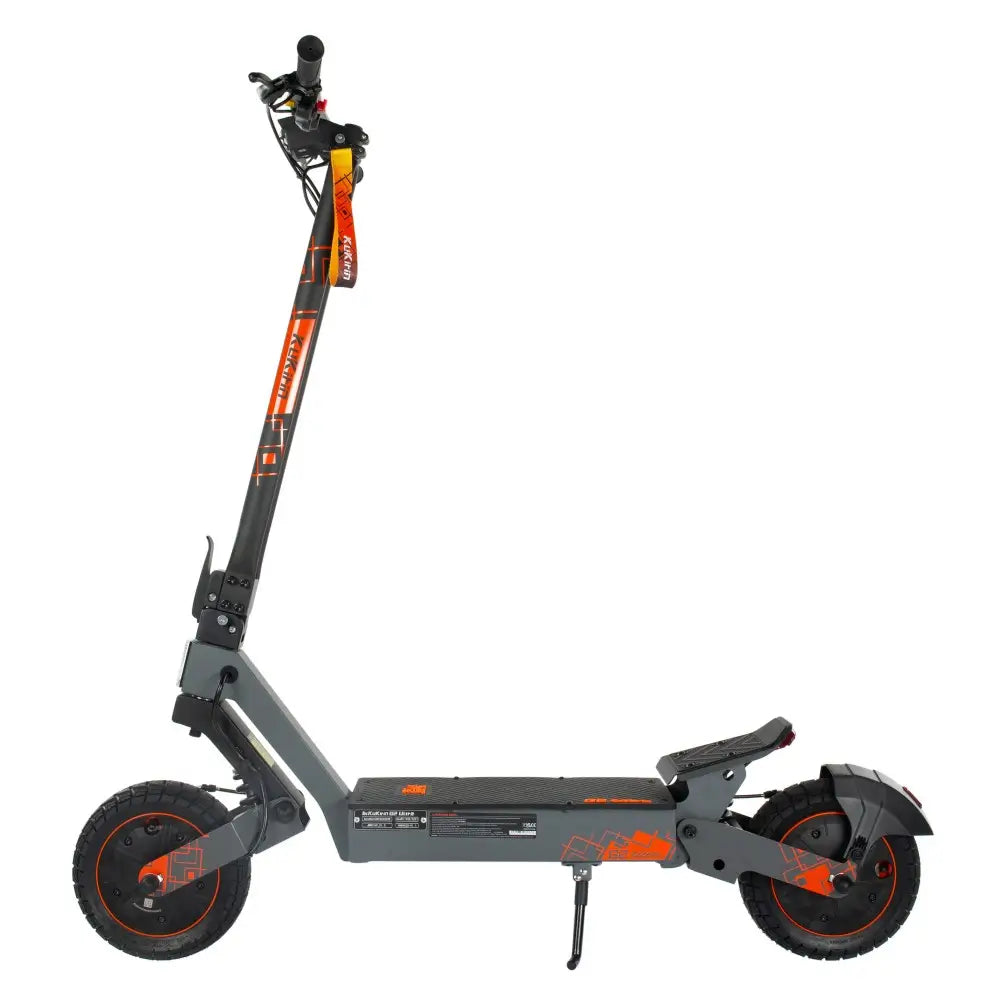
| G2 Ultra | 10" | Vacuum | 220-230 kPa (32-33 psi) |
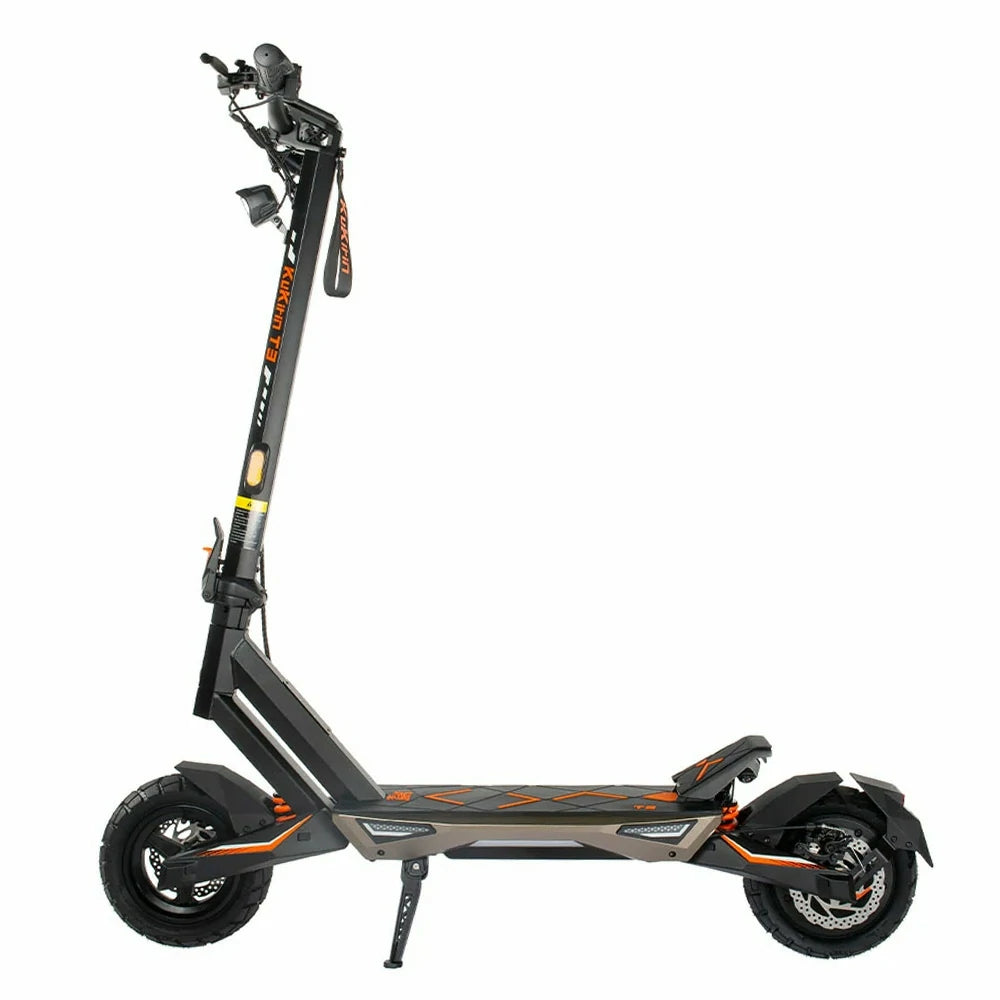
| T3 | 10" | Vacuum | 300-350 kPa (43-50 psi) |
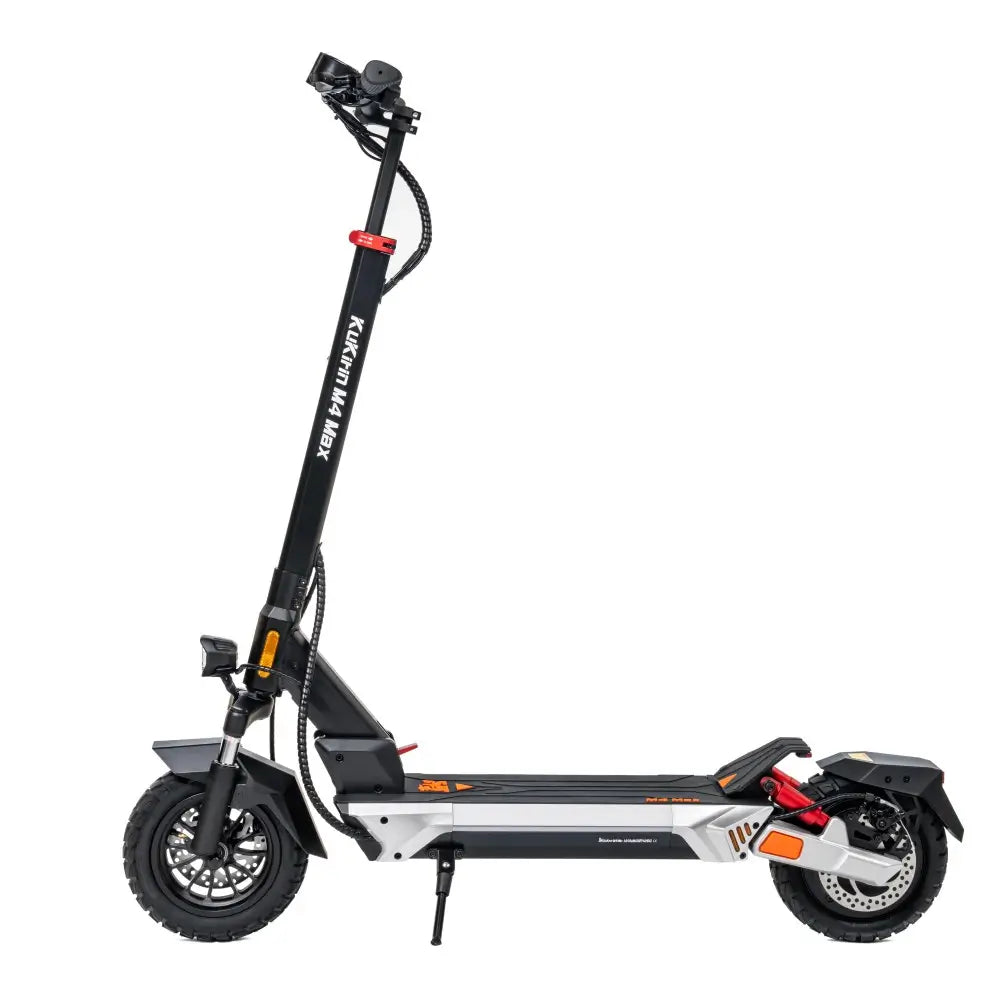
| M4 Max | 10" | Vacuum | 250 kPa (36 psi) |
| X1 (e-moped) | 14"/12" | Pneumatic | 225 kPa (32 psi) |
Budget/Entry Models
| Model | Tire Size | Tire Type | Recommended Pressure |
|---|---|---|---|
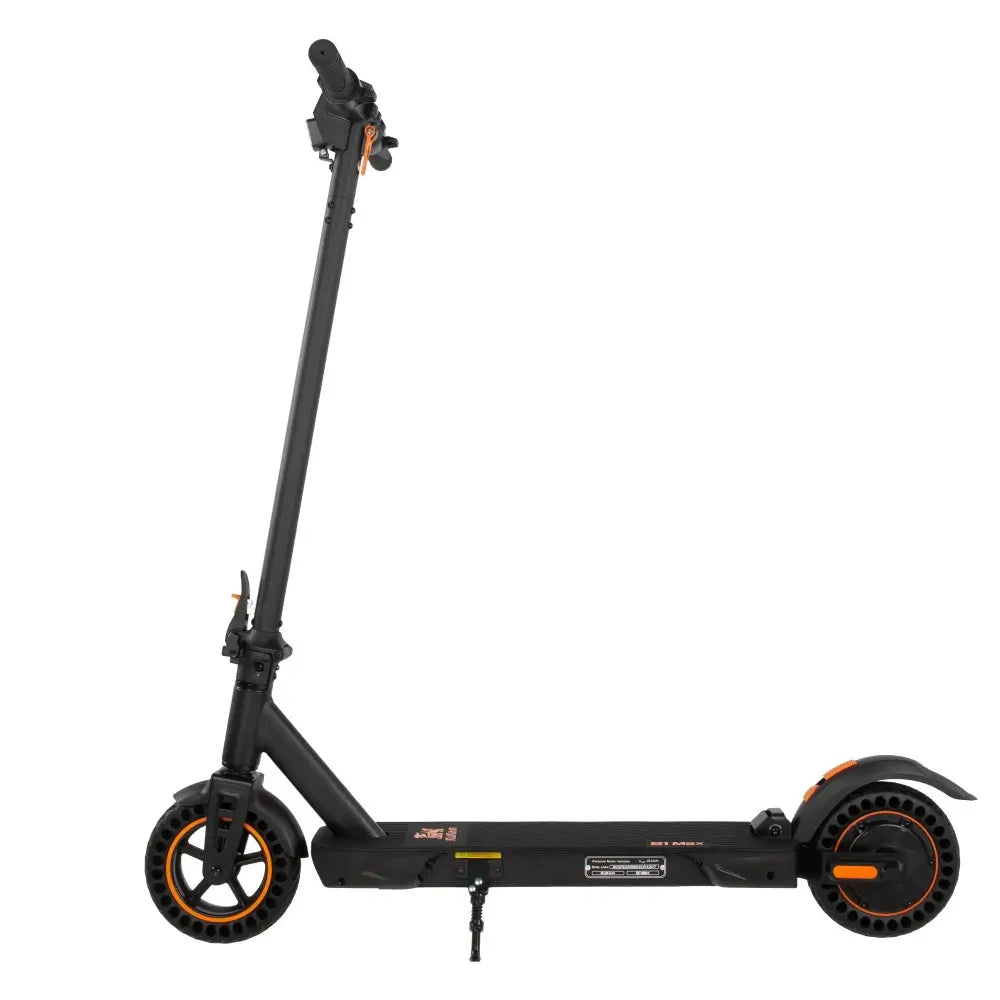
| S1 Max | 8" | Solid honeycomb | No pressure needed (puncture-proof) |
Summary Table by Pressure:
| Pressure | Models |
|---|---|
| 350 kPa (50 psi) | G2 Master, G3 Pro, G4, G3 |
| 340 kPa (50 psi) | G2 Pro, G2 Pro VMP |
| 330-360 kPa (48-53 psi) | A1 |
| 300-350 kPa (43-50 psi) | T3 |
| 282 kPa (41 psi) | G4 Max |
| 250 kPa (36 psi) | M4 Max |
| 220-230 kPa (32-33 psi) | G2, G2 Ultra |
| 225 kPa (32 psi) | X1 (e-moped) |
| N/A | S1 Max (solid tires) |
Why 50psi (350 kPa) Is the Magic Number
For many KuKirin models — especially the high-performance G2 Master, G3 Pro, and G4 — 50psi (350 kPa) is the recommended pressure. Here's why this specific number matters:
1. Maximum Range
Under-inflated tires create more rolling resistance. At 35psi instead of 50psi, you can lose 5-10% of your range. On a G2 Master with 70km range, that's 3.5-7km lost per charge.
2. Optimal Heat Management
At 50psi, the tire structure is properly tensioned. This means less flexing, which means less heat generation inside the tire. On hot German summer roads (30-40°C), this is critical.
3. Puncture Resistance
Under-inflated tires are more likely to suffer pinch flats when hitting potholes or curbs. At 50psi, the tire is firm enough to resist impact damage.
4. Handling and Stability
At 50psi, your KuKirin responds precisely to steering inputs. Lower pressure makes the scooter feel "mushy" and less stable at speed — dangerous when navigating city traffic.
5. Even Tire Wear
Proper inflation ensures the tread wears evenly across the tire. Under-inflation wears the edges; over-inflation wears the center. 50psi is the sweet spot.
How to Check and Adjust Tire Pressure
What You'll Need:
-
A reliable tire pressure gauge (digital is best)
-
A pump compatible with your valve type (Schrader valves on all KuKirin models)
-
Your model's recommended pressure (see table above)
Step-by-Step:
Step 1: Check when tires are cold
-
Best time: morning before riding
-
Alternative: at least 1 hour after last ride
-
Never check immediately after riding in hot weather
Step 2: Remove valve cap
-
Keep caps in a safe place — they prevent dirt from entering
Step 3: Press gauge firmly onto valve
-
You should hear a brief hiss (air escaping)
-
Read the pressure immediately
Step 4: Compare to recommended pressure
-
For G2 Master, G3 Pro, G4, G3, G2 Pro: target 50 psi (350 kPa)
-
For G4 Max: target 41 psi (282 kPa)
-
For other models: see table above
Step 5: Add air if needed
-
Use a pump (hand pump, floor pump, or compressor)
-
Add air in short bursts
-
Re-check frequently — it's easy to over-inflate
Step 6: Release air if over-inflated
-
Press the center pin in the valve briefly
-
Re-check pressure
Step 7: Replace valve cap
-
Hand-tighten only
How Often to Check:
| Season | Frequency |
|---|---|
| Summer | Every 3-5 days |
| Spring/Autumn | Weekly |
| Winter | Every 2 weeks |
Why more often in summer: Heat causes pressure to fluctuate more. A tire that was perfect on a 15°C morning could be over-inflated by 3-5 psi on a 35°C afternoon.

The Summer Heat Factor: Hot Roads Change Everything
Asphalt Temperature vs. Air Temperature:
| Air Temperature | Asphalt Temperature (Sunny Day) |
|---|---|
| 25°C | 40-45°C |
| 30°C | 50-55°C |
| 35°C | 60-65°C |
| 40°C | 65-70°C+ |
How Hot Roads Affect Your Tires:
| Effect | What Happens | Consequence |
|---|---|---|
| Pressure increase | Air expands, psi rises 2-5 psi | Over-inflation, less grip |
| Rubber softening | Tire compound becomes more pliable | Faster wear, reduced cornering grip |
| Increased friction | Hot asphalt is "stickier" | Slightly reduced range |
| Puncture risk | Soft rubber more susceptible | Sharp objects penetrate easier |
The 50psi Summer Strategy:
For models that recommend 50psi (G2 Master, G3 Pro, G4, G3, G2 Pro):
-
Cold pressure (morning): 48-50 psi
-
Expected hot pressure (afternoon): 50-54 psi
-
Action: If you ride mostly in cool morning, 50psi cold is fine. If you ride in hot afternoons, consider 48psi cold (will rise to ~50-52psi hot)
Never exceed 55psi hot — this is dangerous territory.
For G4 Max (41psi recommendation):
-
Cold pressure (morning): 39-41 psi
-
Expected hot pressure (afternoon): 41-44 psi
Tire Pressure by Riding Condition
| Riding Condition | Recommended Pressure (cold) | Notes |
|---|---|---|
| Normal summer commuting (mix of morning/afternoon) | 48-50 psi (G2 Master/G3 Pro/G4) | Balanced for heat expansion |
| Hot afternoon only (35°C+) | 47-48 psi (cold morning) | Allows for 2-3 psi expansion |
| Cool morning only (under 25°C) | 50 psi | No significant expansion expected |
| Heavy rider (100kg+) | 50-52 psi (cold) | Slightly higher for load |
| Light rider (under 65kg) | 48-50 psi (cold) | Slightly lower for comfort |
| Rough roads/cobblestones | 45-48 psi (cold) | Lower pressure for comfort, but watch for pinch flats |
| Maximum range priority | 50 psi | Lowest rolling resistance |
For G4 Max:
| Riding Condition | Recommended Pressure (cold) |
|---|---|
| Normal summer | 39-41 psi |
| Heavy rider (120kg+) | 41-42 psi |
| Rough roads | 37-39 psi |
Common Tire Pressure Mistakes in Summer
Mistake 1: Never Checking Pressure
The problem: Many riders inflate their tires once and forget about them.
The reality: Tires naturally lose 1-3 psi per month. In summer heat, pressure fluctuates daily.
The fix: Check pressure every 3-5 days during summer.
Mistake 2: Checking Pressure After Riding
The problem: You measure 52 psi after a hot ride and think you're over-inflated.
The reality: That 52 psi might be 48 psi cold — perfectly fine.
The fix: Always check when tires are cold (before riding or 1+ hour after).
Mistake 3: Using a Gas Station Air Pump
The problem: Gas station pumps are often inaccurate and deliver air too quickly.
The reality: You can easily over-inflate by 10+ psi in seconds.
The fix: Use a handheld gauge and pump. They're more accurate and controlled.
Mistake 4: Ignoring the Spare/Extra Tire
The problem: Only checking the tires on your main scooter.
The reality: If you have multiple KuKirin models or spare wheels, they also need attention.
The fix: Check all tires in your household monthly.
Mistake 5: Inflating to "Looks Full"
The problem: Relying on visual inspection or squeezing the tire.
The reality: A tire can be 10-15 psi low and still look fine.
The fix: Always use a pressure gauge — never guess.
Model-Specific Summer Pressure Tips
KuKirin G2 Master, G3 Pro, G4, G3
Target: 50 psi (350 kPa)
These high-performance models benefit most from precise pressure. At 50psi:
-
Maximum range (70-80km)
-
Best stability at speed (50-65km/h)
-
Optimal climbing traction
Summer adjustment: If riding exclusively in extreme heat (35°C+ afternoons), 48psi cold is acceptable.
KuKirin G4 Max
Target: 41 psi (282 kPa)
The G4 Max's 12-inch tires are larger and require lower pressure for optimal grip. At 41psi:
-
Best grip on hot asphalt
-
Proper contact patch for 86km/h stability
-
Optimal heat dissipation
Summer adjustment: Stick to 39-41psi cold. Do not exceed 45psi hot.
KuKirin G2, G2 Ultra
Target: 32-33 psi (220-230 kPa)
These 10-inch vacuum tires are more forgiving. At proper pressure:
-
Comfortable ride on city streets
-
Good puncture resistance
-
Balanced handling
Summer adjustment: 32-33psi cold is fine year-round.
KuKirin A1
Target: 48-53 psi (330-360 kPa)
The A1's 10-inch vacuum tires benefit from higher pressure:
-
Better range (45km)
-
Responsive handling
Summer adjustment: Target 50psi cold.
KuKirin S1 Max
Target: No pressure needed
Solid honeycomb tires never go flat. No summer adjustment needed — one less thing to worry about on hot days.
KuKirin X1 (e-moped)
Target: 32 psi (225 kPa)
Different vehicle class with different requirements. Check pressure monthly.
Signs Your Tire Pressure Is Wrong
Too Low (Under-Inflated):
| Symptom | What It Means |
|---|---|
| Scooter feels sluggish | Higher rolling resistance |
| Range is noticeably shorter | 5-15% range loss possible |
| Tire looks slightly squished | Visual confirmation |
| Unusual wear on tire edges | Under-inflation wear pattern |
| Squirming feeling in corners | Tire flexing too much |
Too High (Over-Inflated):
| Symptom | What It Means |
|---|---|
| Harsh, bumpy ride | Less cushioning from tires |
| Reduced grip in corners | Smaller contact patch |
| Center of tire wearing faster | Over-inflation wear pattern |
| Increased risk of puncture on sharp objects | Tire can't deform around obstacles |
Tire Pressure and Range: The Numbers
| Model | Correct Pressure | Under-Inflated by 20% | Range Loss |
|---|---|---|---|
| G2 Master | 50 psi | 40 psi | 5-10% (3.5-7km) |
| G3 Pro | 50 psi | 40 psi | 5-10% (4-8km) |
| G4 | 50 psi | 40 psi | 5-10% (3.5-7.5km) |
| G4 Max | 41 psi | 33 psi | 5-10% (4.5-9.5km) |
| G2 | 32 psi | 26 psi | 5-10% (2.5-5.5km) |
| A1 | 50 psi | 40 psi | 5-10% (2-4.5km) |
Real-World Example:
A G2 Master with 70km potential range:
-
At correct 50psi: 70km
-
At 40psi (20% low): 63-66km
-
At 35psi (30% low): 60-63km
That's up to 10km lost per charge — just from under-inflated tires.
Frequently Asked Questions (FAQ)
Q1: Why does my KuKirin G2 Master need 50psi when my car only needs 32psi?
A: Small scooter tires (10-12 inches) have much less air volume than car tires. Higher pressure is needed to support the weight and prevent pinch flats. Car tires have large air volumes and can run lower pressures.
Q2: Can I use a car tire pump on my KuKirin?
A: Yes, but carefully. Car pumps deliver air very quickly — it's easy to over-inflate. Use short bursts and check pressure frequently. A handheld bicycle pump or scooter-specific pump is safer.
Q3: How much does tire pressure affect range?
A: Significantly. Under-inflation by 20% can reduce range by 5-10%. Under-inflation by 30% can reduce range by 10-15%. On a G3 Pro with 80km range, that's 8-12km lost.
Q4: What's the best time of day to check tire pressure in summer?
A: Early morning, before the sun has heated the ground. This gives you a "cold" reading. If you check in afternoon, your tires will read 2-4 psi higher due to heat expansion.
Q5: My G4 Max tires feel soft at 41psi. Is that normal?
A: Yes. 12-inch tires at 41psi will feel softer than 10-inch tires at 50psi. This is by design — the larger tires need lower pressure for proper grip and comfort.
Q6: Can I run lower pressure for a more comfortable ride?
A: Yes, but stay within 10-15% of recommended pressure. For G2 Master (50psi), you can run 45psi for rough cobblestone roads. For G4 Max (41psi), 37-39psi is acceptable. Any lower increases puncture risk and reduces range.
Q7: What happens if I ride with under-inflated tires in summer?
A: Multiple issues: reduced range, increased puncture risk, poor handling, faster tire wear, and more heat buildup. Under-inflated tires are a safety hazard at high speeds.
Q8: Does the S1 Max need tire pressure checks?
A: No. The S1 Max has solid honeycomb tires that never go flat. No pressure maintenance required — one of the benefits of this model.
Q9: How often should I replace my KuKirin tires?
A: Every 2,000-5,000km depending on riding conditions. Inspect tread regularly. Replace when tread depth is below 1mm or if you see cracks, bulges, or embedded debris.
Q10: Can extreme summer heat cause a tire blowout?
A: Very unlikely on electric scooters. Maximum pressure ratings (usually 50-60psi) have a significant safety margin. However, riding on severely under-inflated tires in extreme heat increases puncture risk.
Q11: Do I need different pressure for front and rear tires?
A: For most KuKirin models, same pressure front and rear is fine. For heavier riders (over 100kg), adding 1-2 psi to the rear tire can help. For dual-motor models (G2 Master, G3 Pro, G4 Max), both tires carry similar loads — equal pressure is fine.
Q12: What's the best pump for KuKirin tires?
A: A floor pump with a pressure gauge is best for home use. For travel, a compact hand pump works. The included pump with some KuKirin models works, but consider upgrading to one with a built-in gauge for accuracy.
Quick Reference: Summer Tire Pressure Card
| Model | Cold Pressure | Check Frequency | Hot Day Adjustment |
|---|---|---|---|
| G2 Master, G3 Pro, G4, G3, G2 Pro | 50 psi (350 kPa) | Every 3-5 days | 48 psi cold if riding in 35°C+ |
| G4 Max | 41 psi (282 kPa) | Every 3-5 days | 39-41 psi cold |
| A1 | 48-53 psi | Weekly | 48-50 psi cold |
| G2, G2 Ultra | 32-33 psi | Weekly | 31-32 psi cold |
| T3 | 43-50 psi | Weekly | 43-45 psi cold |
| M4 Max | 36 psi | Weekly | 35-36 psi cold |
| X1 (e-moped) | 32 psi | Monthly | No adjustment needed |
| S1 Max | N/A (solid tires) | Never | No adjustment needed |
Summary: Keep Your Tires at the Right Pressure This Summer
Proper tire pressure is one of the simplest and most effective ways to improve your KuKirin scooter's performance, safety, and range. In German summer heat, it becomes even more critical.
The Golden Rules of Summer Tire Pressure:
-
Know your numbers — Check the table above for your model's recommended pressure
-
Check cold — Always check before riding or after 1+ hour of cooling
-
Check often — Every 3-5 days in summer
-
Use a gauge — Never guess or rely on visual inspection
-
Adjust for heat — Consider 1-2 psi lower cold pressure if riding exclusively in hot afternoons
-
Don't forget the G4 Max — 41psi, not 50psi
The bottom line: A few minutes with a pressure gauge each week will save you range, protect your tires, and keep you safer on Germany's summer roads. Whether you're cruising Berlin's boulevards, climbing Munich's hills, or commuting through Cologne, correct tire pressure makes all the difference.
Need a reliable tire pressure gauge or pump? Visit the [KuKirin DE Official shop] for recommended accessories.